
Interview: Murkage Dave
An urban wordsmith and singular musical visionary, his music is an amalgamation of many different styles and influences combined in a way that is uniquely, explicitly his.


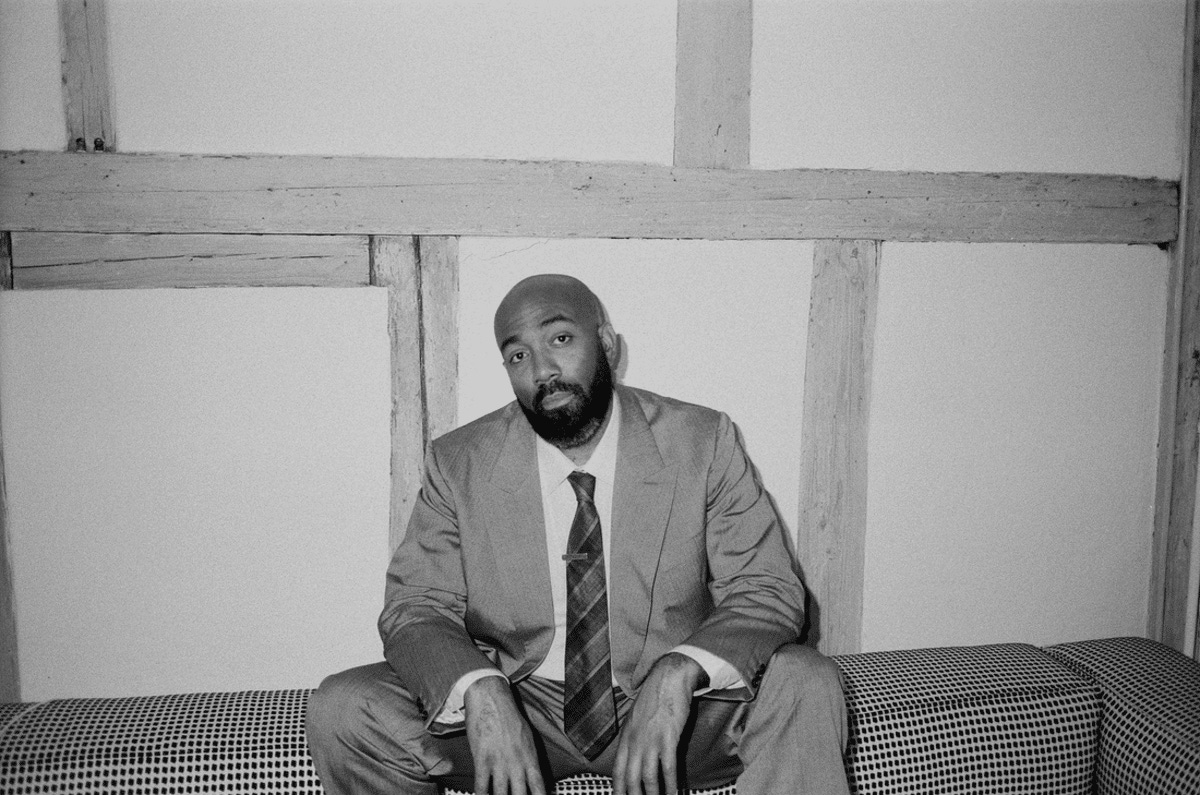
By this point, you’ve been introduced to Murkage Dave. An urban wordsmith and singular musical visionary, his music is an amalgamation of many different styles and influences combined in a way that is uniquely, explicitly his. We caught up with him for a chat about his new record - Brut Thoughts - and much more.
Kinda Grizzly: Well, I mean, I haven’t got any kind of practiced questions or anything like that, I haven’t got anything lined up. I just thought we’d have a bit of a chat. Obviously, you’ve got a new album to promote, and that, and obviously, we’ll cover that. But I mean, I’ve been interested in what you do for a good while. So I want to go back a bit, if that’s alright? So, a while ago, I saw some videos of you doing some songs from the first album, but like poetry. In a poetry bar or somewhere, or a poetry night or something, and I wondered, was that something you did first, or was that just a rare dalliance or an excursion for you?
Murkage Dave: Yeah, it was around the time that my second album came out. Basically, these guys - that night’s called Verses - and they tagged me when they were promoting their night on Instagram, and one of them was wearing my t-shirt in the photo, so they tagged me. And I just said to my missus, because we were around, I said, let’s just go down.” So I just turned up, and they were like, “what the what the fuck are you doing here, hows it going?!” (Laughs)
KG: That’s pretty cool.
MD: Yeah. And so I was watching the poetry, and they had some great people on and stuff, and I realised that my songs could work in this format because of the way that I write my lyrics. I’ve got a lot of songs where I could kind of convert them, and they could work. So I said to them, yeah, I’d like to do something. So every month they have a guest who’s unannounced. So I just went down, and I just did it. It was different. It was some songs from the second album, some songs from the first, and it was cool. I think I’m going to do some more poetry. I quite enjoy it. It’s not something that I - I mean - I never wrote poetry when I was younger or anything like that. It was just kind of like, I think when I’m writing songs, I’m always trying to, I guess, I want every line to mean something, and so I guess that’s why it translates to poetry.
KG: Absolutely. I can hear that, that makes sense. So you’re looking to do more of that in the future? That’s interesting.
MD: Yeah. I mean, I really like, you know, James Massiah?
KG: No, I don’t think so. Not by name, anyway. Maybe one of those by face.
MD: He’s wicked. He’s wicked. Check him out, man. He started off as a poet, and then he started rapping. When I’ve seen that he’d started, I was like, oh, I wonder what this is going to be like, but wow, this is actually incredible. So I speak to him quite a bit. He does this poetry night called Adult Entertainment, which is really amazing, and I said I was up for coming down there and doing something as well, so.
KG: Okay, so that could be another potential avenue in the future, maybe.
MD: Yeah, you know. Yeah.
KG: There’s a guest on your new album called Trainee, who was new to me. And whilst not a poet - you would probably label him a rapper - I feel like his work is very poetic. I feel like he really just paints very vividly with his words, well, at least on his contribution to your album, on that song, so I’ll definitely be listening to more of him, but that was one of the highlights of the album for me. Although I think the album is full of highlights. I think you’ve always been like a boundary-pusher and a genre-blender, but I feel like you’ve pushed it even more on this one. Do you think that’s fair to say?
MD: Yeah, I think so. I think I smashed through a wall on this one. I think there’s something that happened. Also, I’ll let Trainee know that you said that because we got to keep him encouraged, man, he’s brilliant. He’s actually making some of my videos and stuff as well. We’re shooting a video on Saturday, so I’ll let him know that you said that.
KG: Is that another single from the album?
MD: It’s the video for Generation Left on Read.
KG: OK.
MD: It kind of got pushed back a bit because James has been in LA, Yard Act have just been finishing their album there. They’ve just wrapped it, and so we couldn’t do what we were initially going to do, but yeah. So, yeah, the video got pushed back a bit, but actually speaking of Yard Act, that was kind of the turning point. They took me on tour - what year was it? It was spring 2024 - I opened for Young Fathers at the Royal Albert Hall, then I went on tour and did some stuff with Yard Act in the UK. I just kind of came out on their encore and sang some bits over this wig-out moment they had at the end. But then I went on tour with them in Europe, and I was opening every night, and I think that really had an effect. Not necessarily the shows, but I think the music I had worked with their audience. I’ve always kind of felt that my music - as you say, it kind of runs between different genres - but what was really the thing was the tour bus and everybody jumping on the Bluetooth speaker and playing their stuff. You know, we spent a month on this bus with people who just love music, man, and they’re just almost competing with each other. Not in an unhealthy way, but just, you know, “have you heard this? Have you checked this out?” Just desperate to tell each other about the thing that they should check out. And I think that had an impact - I discovered so much stuff. And I’ve always been like that with music, but I think that month was just hyper-thrusted something that was already in me. And then after that, I started a radio show. I’ve been doing this radio show called The Outlet...
KG: Yeah, on Refugee Worldwide. I was going to ask you about it - Refugee Worldwide.
MD: Yeah. Yeah. It’s Refuge. They always get that. They get pissed off about it (Laughs).
KG: Oh, Refuge. Sorry. Not Refugee. Excuse me!
MD: Yeah, yeah, no - they’re like, when you submit the show, they go “by no means say Refugee!” (Laughs) Yeah, it’s Refuge Worldwide. But they’re like, I guess, like NTS out in Berlin, and I started doing a show on there, off the back of doing the Yard Act run. I guess I’ve been doing that radio show for about a year now, and that really kind of - it just kind of gave me, I mean, I don’t need much of an excuse - just to kind of start going in on, you know, whatever music. But I feel like I haven’t got enough time. If I were able to just dedicate all of my time to checking out music - like, I’ve got a list so long, you know - but then it also made me think about the music I was making and whether I would play it.
KG: As in, would you listen to it yourself? Is that what you mean?
MD: Yeah, I mean, I guess you’re always in love with your own music because you spent so much time making it.
KG: And if you aren’t in love with it, you’ve done something wrong, right?!
MD: Yeah, because if you’re not, the chances of someone else being in love with it are low. No, but I meant would I play it on the show or play it out and stuff? I think Young Fathers, as well, have been important. Like spending a lot of time and having a lot of chats with Kayus. Kayus from Young Fathers has been important, actually, from the very beginning. Because if it wasn’t for him, I wouldn’t have made my first album, if he hadn’t pushed. He’s one of these people who kind of cusses you into doing good shit, kind of thing. (Laughs)
KG: Right. Okay. One of those. One of those guys (Laughs)
MD: Not in a negative way. He’s just got that kind of energy. He’ll push you and be like, “What are you doing, man?” - he’ll push you on. Also talking with Timothy London, a lot of whom used to manage them and produced a lot of their stuff. I think the difference was that when I made my second album, I wrote it during the pandemic, so I didn’t really have those moments where you kind of crash into things. It’s just the internet.
KG: Very limited influence and worldview, yeah.
MD: Yeah. So I think my second album was more like - I had more confidence as a songwriter - so I was trying to push, and I guess I wouldn’t have met the Yard Act boys if it wasn’t for that second album. I guess just being outside, really crashing into people and culture, and being in different parts of the country, different parts of the UK. Like really seeing - going to some of these Reform ends, where they love Nigel Farage - seeing what they actually look like and what it actually looks like there and what those people are seeing. And then going to Europe because I can’t afford a studio in London. I’d say most musicians that I know, unless they’re like - I mean, I know musicians where there’s maybe like five of them sharing one studio and then they pick a day - pick a couple of days a week or whatever. There are a couple of men I know who have had big hits as producers, but apart from them, no one. If you link up with a musician in London... Sorry, actually, where are you based?
KG: I’m in Charlton, South East London.
MD: Oh, OK. OK. Cool. So you must know this?!
KG: I know this. Yeah. (Laughs) Well, a lot of people that I know are self-reliant, you know, in the age we live in, we’re lucky because we have access to all manner of technology that enables us to create and create in a way that we wouldn’t have had, you know, decades ago. But it’s obviously not the same as a studio experience. We can do a lot of stuff autonomously, and we don’t rely on others as much; however, obviously, there is still something to be said for a proper studio.
MD: Yeah, I think that, like, you get a different thing out of yourself when you’re - don’t get me wrong - I’ve written some heat in my lounge, but I think you get something out of yourself. But I guess what I’m trying to say is I didn’t have a studio. I haven’t been able to afford a studio in London since, maybe, 2017-18. All those places got knocked down or turned into hotels and stuff. So what I did - where I’m lucky, I guess - is I know a lot of people and people are kind. So like, people say “come and stay with me” or “oh, I’m on holiday, or I’m working away, you can use my house,” or some people let me use their studio - there’s a guy I know who’s got a house in Margate. Right? Do you know what I’m saying?
KG: Yeah.
MD: Stuff like that. So I stayed on my friend’s sofa in Berlin while he was working and studying. He’s a black South African, and he’s trying to do his thing in Germany. I was staying with him, and when he went out, I would write at his house. Actually, I’d say Pirate Studios in Germany is way cheaper than in London. It’s actually cheaper - if you can stay with someone, it’s cheaper to fly to Germany and do Pirate Studios in Germany than to do it in London. (Laughs)
KG: Something’s not right there.
MD: Yeah, I did a lot of moves like that. I stayed in this guest house in the middle of a field in Denmark. In the countryside. That was nice. It was nice weather at that time as well. Just different stuff like that. I wrote in Amsterdam. Loads of shit, as I said. I spent a lot of time in the Midlands - one of my good friends, who’s also a very talented producer, Star Slinger, lives there. I got an education on what those Reform ends are like; I was up there. Yeah, I was all over, man, and so what you’re hearing is all of that stuff. I think it’s like some of the musicians who had an impact on me over the last couple of years, but also being able to be around and outside. With my first album, I was moving around a lot. I think that’s how I get the best out of myself. You know, I’ve got to a point now where I know I can always write a song, but I think if I really want to kind of push further, I want to experience stuff and understand stuff and meet people. People just fascinate me, man. So that’s where it all, I guess, has come from.
KG: That makes sense, because I think your lyrics are very observational. There’s a lot of big moments to little ones, big things to small things, you know, it runs the gamut - the things that you seem to pontificate on in your lyrics. From minutiae, small, little things to really big questions - and I think that makes for an interesting combination. I think the new album sits alongside the other two very nicely in that respect, continuing in a similar vein of the things you’ve explored before, but in a more artistically ambitious way, I would say. I think it’s really brave, musically.
MD: Thank you, man. Yeah. I mean, that’s really nice to hear because you don’t know. You don’t know. I mean, I agree, but you don’t know. Now, because like a few people have had the link to the album and some of the songs are out and stuff, you’re slowly starting to get to that, because it takes on a life of its own. You don’t know how people are going to see the records and stuff, so it’s just interesting to hear. Obviously, you sound like someone with a lot of insight, so I always kind of thrive off hearing what someone like you - who is quite thoughtful - would think of it. You know what I’m saying? It’s interesting to me.
KG: Well, I’d like to think of myself similarly to how you painted the Yard Act guys earlier - about, like, how voracious their appetite is for music and how much they’ve consumed over the years. I think I put myself in a similar kind of box. So I guess those are the sort of people you want to hear from, really. Musos, for want of better terminology, essentially.
MD: Yeah, yeah.
KG: So you mentioned the show on Refuge Worldwide, and I wanted to ask you if you have any other artistic endeavors or ambitions? Because a lot of artists just like, you know, you said earlier, “if you had more time…” - a lot of artists aren’t happy staying in one lane, you know what I mean?
MD: Yeah.
KG: I don’t know how much involvement you have with the musical side of your work, or if you are exclusively a lyrics man or what? How does that work? Actually, that’s a whole separate question, to be honest. You know what? Let me break it down into two. Number one: artistic endeavors for the future. What would you like to do?
MD: I mean, yeah, they’re quite different questions in a way. I kind of wanted to tackle the other one first. (Laughs)
KG: Well, let’s go to the other one. Let’s do the other one. (Laughs)
MD: Yeah, well, my thing is music really. I guess maybe if I’d had a comfier upbringing, I might have ended up being a director or something because I was always writing stories and putting things together, you know? I made, like, a concept for a computer game when I was a kid, you know, stuff like that. I was always doing stuff like that, but I guess, all my role models - you know, the people that look like you, that you can see - were doing music. And I’ve always been so passionate about music, ever since I can remember, and I always played instruments growing up, like classical - a lot of classical - and some jazz as well, and so, yeah. I mean, I’m involved. I think the thing that I’ve always done is - I guess it depends - but you know, like in rock music, what the producer does in rock music? I kind of do a bit of that with my music, where it’s like maybe someone might start with a riff on a guitar or they might give me something, or we might be in the studio and we put together a demo. A lot of the time, the first thing that you do - you’re throwing all these ideas at it, and there’s too much happening. So then it’s like “What is going to communicate this the best? What can we take out?” And then I’ll start thinking, “OK, who could rough this up? Who could do the drums?” - Do you know what I’m saying? Or maybe we steal the drums from this song that exists already (Laughs) So I guess like in terms of like arrangement and the combination of stuff I get really involved in that, but there’s producers that will send me an instrumental and I’ll be like “oh, that’s amazing but maybe we take that bit out and play that bit live or whatever” and then at the end of the process, once we’ve got all the demos, I bring it to my guy Cores who lives on the other side of Clapton - and he’s got like a proper, proper studio - and we finish everything with him and he mixes everything and does his wizardry with the records. But each records different, so with Running Outta Road - that one that you mentioned earlier - the trick with that was, I was in the studio with the producer and he’s like a kind of techno and garage DJ - and we were in the studio and he just starts working on stuff, and I was like “yeah, that’s it, that’s it”. And then I took it away, you know, but then when I asked him for the parts, for the song, he tried to make it better.
KG: And you were already working with something that was different from what he wanted you to work on?
MD: He just tried to make it more kind of professional or whatever because he’s more of a DJ than a producer.
KG: Right.
MD: He tried to make it more professional, and so I had to instinctively say, “Okay, cool, do you know what, the first version’s got more vibe, let’s go with that”. But then there are other records where there might be four different people that have come in that maybe don’t even know each other. And someone’s playing the bassline here, and someone’s playing keys there, and I think a lot of the time - sometimes because my music is essentially like pop music - sometimes the first demo is like “OK, I like what’s being said, and I like the song”, but sometimes it sounds too commercial. I don’t like it if there’s too much…it’s like it’s trying too hard, or it’s throwing too much at the wall.
KG: Well, you used a phrase earlier when you were talking about the creative process, you mentioned that you might be inspired to think, “Who can rough this up?” Which is what it sounds like you’re talking about.
MD: Yeah, or sometimes it just starts rough, and you leave it there. Sometimes it needs a bit of shine, a bit of sparkle. It just depends. I think it depends on what you’re trying to say. I mean the song Putting On A Party, on the album - I think that’s the third track - that’s like a four-bar section - my guy Ashton, and he’s an actor as well. He’s a good actor. And he does music as well and everything. He was playing me a bunch of stuff he was working on, and there was this one bit I was just like, “Can I just get that one section?” Like, do you know what I’m saying? Just those four bars of that instrumental, and that can be like the whole beat. And then that’s Kayus from Young Fathers on that as well, just coming in and just doing a madness. And funnily enough, we got into a bit of a - we couldn’t agree. He’s on loads of the album - he’s not credited - but he’s on like five or six songs on the album, just kind of like screaming things out and adding his bits. But on that particular song, he was like “oh, we need to change the arrangement”. I was like “bro, what?” And then he was like, “nah, you got to do it like this”. And we kind of bumped heads on it, but it was interesting because he cared that much about the record. I was kind of blown away. In the end, I think we ended up doing it closer to his way. I think we compromised a bit, and he was right; he was actually right. Now that I’ve had some space from it, I can see it straight, what he was saying was right. He was just really passionate about how it came out, and we had to compromise because he wanted to do all of this stuff, and I was like, “bro, like, it’s sitting in the album in this way, blah, blah, blah,” so I had to kind of twist his arm. I said, “OK, why don’t we - after we finish this - let’s do an EP and you can exec-produce the whole EP?” and he was like, “OK, cool, cool”. (Laughs)
KG: (Laughs) Deal! That’s funny.
MD: That’s what I had to do, what I had to give him to kind of get him off my back a bit, but it was good that he was that passionate.
KG: Absolutely.
MD: It’s a bit of everything. I think for me, I’ve got a thing where I say, “let the experts expert”. Like the person who’s good at the thing, I just kind of want to let them do what they’re good at. And then we just try and kind of bring it together and make it work, you know?
KG: Yeah, well, what you’re saying makes perfect sense, and it makes for art that works. This album’s got a lot of collaborations on it, then. I knew the credited ones, but there’s even more than what you can see when you look at the tracklisting.
MD: Yeah, yeah, yeah.
KG: Oh, you know what? I wanted to give a special mention to the guitars played by the gent from pencil - what’s his name?
MD: Oh. Kamran Khan.
KG: Incredible. When that tune starts - I mean, I know you’re a Smiths guy - so when I heard that, I was like “has he given him a brief?” He’s been like “you see Johnny Marr, yeah…” (Laughs)
MD: (Laughs) No, he just loves Johnny Marr. Johnny Marr is like his favourite guitarist.
KG: You can tell - that guitar lick when it starts. I was just blown away.
MD: Which one are you talking about?
KG: One 4 Me & U. Has he got more than one? Does he contribute guitar on more than one track then?
MD: He actually made the intro.
KG: Oh, really? The Brut Thoughts Theme?
MD: Yeah, we did that in my lounge, actually, because I was like, “look, we need something to kind of open the record.”, I was explaining what I wanted to do, and then he just kind of like translated what I was saying and it was like “mate, you just fucking understood it” you know? He did that one. And also, uh, there’s an interlude called Friends And Family - that was Kamran and a guy called Peter Brien. I just went to their studio, and I didn’t think I was going to have anything that day, but that’s all live, that one. We just kind of did it. I mean, obviously, Cores balanced it out and stuff, but it’s basically just like what we did that day.
KG: This is Friends And Family interlude, and what about Mortgage Guy?
MD: Yeah, yeah. So Mortgage Guy was actually produced by Ryan from Yard Act.
KG: Oh, really?
MD: Yeah. He was playing me a bunch of stuff. He’s a great riff writer and a great producer. He really plays that role within Yard Act as well. But going back to Kamran. Kamran’s an interesting one because he basically just came up to me in the street.
KG: Really?
MD: Yeah, I was coming back from the gym. I was mad sweaty, just walking home from the gym, then he just came up to me in the street and just, like, quoted a lyric from See Man Smile from my first album. He just quoted the lyrics to me in the street. That was kind of a unique one, like people say stuff here and there, but in Hackney, for the most part, it’s just calm. So then we started chatting, and I just kept bumping into him, and he’d always had a guitar on his back, so I told him to email me some stuff. He’s got solo stuff as well. I don’t know if you’ve checked it?
KG: No, I haven’t listened to it, but I figured out as much when I was doing some research.
MD: Yeah, so he’s come in and been pretty influential, actually - I’m gonna do the live shows with him as well. We’re gonna have a kind of thing where it’s like a halfway thing. So I’m going to have the instrumentals, but then we’re going to have guitar and drums adding to it, and he’s going to play, because he’s part of a lot of different projects. He also plays guitar in you know, The Japanese House?
KG: Yeah!
MD: Yeah. He’s like the live guitarist for that as well.
KG: Ohh, OK, I didn’t realize. Because that’s how I know Pencil, I saw them supporting The Japanese House in Birmingham a couple of years ago or something.
MD: Yeah. So I think a couple of them play in Amber’s band. I don’t know how many of them, but at least two of them play in that band.
KG: Right. I didn’t realize that. Makes sense. Her stuff’s brilliant.
MD: And actually, I think maybe he’s brought the drummer in as well. It might be the drummer from Pencil as well, who’s going to be playing with me. So yeah, we’re working. I’m actually going to see him tomorrow. We’re going to start working. Working out things.
KG: Those two shows you’ve announced for the album, are they a precursor to more stuff? Because it’s, you know, it’s two shows. It’s just two shows. What’s the plan after that?
MD: We’ve got some festivals in the spring. I mean, I want to pop up in different cities and do some different things, but I mean, touring’s expensive, bro.
KG: Yeah, yeah, I’ve heard.
MD: I’ve heard artists that are, you know, bigger than me, like, way bigger than me, are complaining about how expensive it is. It’s like I do want to do more, but you kind of got to like, you gotta ease into it. I think the pandemic really changed that all, I mean, that’s a whole other subject.
KG: Well, and Brexit didn’t help either.
MD: Yeah. I mean, especially when you’re talking about going over to the Schengen Area.
KG: Also circling back quickly to what I was asking you about with your involvement with the music - your musical involvement. It sounds like what you’re describing is sort of loosely, somewhere between a musical director and executive producer, or an arranger.
MD: Yeah, I guess as me and Cores will always be down, on all three albums it will say exec-produced by Murkage Dave and Alex “Cores” Hayes. It’s only more recently that I’ve started to think about that, you know. I just sing the songs and do my bit, really, and everybody else does their bit, and you know, I’m pretty lucky to be working with some of the people I’m working with.
KG: Yeah, it sounds like you’ve assembled a very useful circle of friends and an artistic network that you can tap into, as you said, for the best person for the best job. “Let the experts expert”.
MD: Yeah. I think that slowly, because even as I’ve been putting out these singles, there have been people who have been coming out of the woodwork. It’s been really nice, actually, but it’s just like Outsider Gang, man. I mean, musicians love music. And so, you know, at minimum, even if you release music and no one gives a fuck, I feel like a musician will give a fuck.
KG: Absolutely.
MD: And that’s how I’ve slowly gotten to know all these people, really. Just like I’m into your shit. You’re into mine, you know?
KG: Yeah, that’s what it’s about. I mean, I thrive on that shit, you know. Every month, for Kinda Grizzly - the name I’m writing this article under - I compile a playlist of songs, and I write a blog about them. I just write a paragraph or whatever about each one just because I think people need to know about them, and that’s what keeps it going. I asked you earlier about other artistic endeavors, and we went off on a tangent. Circling back to that, is there anything that you want to do? You know how you talked about actors being musicians and vice versa? And I think Trainee is also an illustrator, for example, there’s, you know, lots of people with their fingers in many pies. What about yourself?
MD: Yeah, Trainee does a lot of things because he’s a stand-up comedian as well, man. And he can act. He’s insanely funny, just like a very funny person. He can do pretty much everything. As for me, I wrote, like, a sitcom with my friend, but we had to park it for a bit - I’m sure we’ll look back on it, but I’m fascinated by film. I love watching interviews with actors and directors. In a way, they can be more honest, I think, than musicians, because musicians kind of have to stick to a script - and when I say this, I’m like, “Am I doing this?” I don’t know - but musicians have to stick to a script. Whereas I feel that, because actors are playing different people and the director is telling different stories, they don’t really have to necessarily stick to a script. So I love watching the round table stuff or actors interviewing each other because I feel like they give away more secrets, I think.
KG: That’s interesting, especially in this day and age. I mean, we live in, like, the age of information overload. You know how, back in the day, there were musicians who were mysterious, and you just didn’t know anything about them. That’s gone now, right? Apart from, like, Kate Bush, wherever she is, you know, everybody else is in the public eye all the time, and you know, everything about them - for the majority of the time, I would say. So that’s interesting that you feel like that musicians are even able to keep secrets now.
MD: I think there still are mysterious musicians. I guess the whole EsDeeKid thing kind of works off the fact that nobody knows who he is. Or people say, oh, I think I know who he is or blah blah blah or like, Casisdead still kind of plays with that thing. Like he wears a prosthetic face. There are still some examples, but yeah, I agree, it’s like it’s a lot harder to cut through the algorithm. But then, I don’t know, I mean, I’ve been trying to explain this to a lot of people really, but I just think that whole thing is just dead - and when I say it’s dead, I mean, it’s dead in all senses. In all senses. (Laughs)
KG: Which thing? The algorithm thing.
MD: Yeah. I just think that, you know, I use social media, but it’s not - like I understand that some people, some of my audience are still getting information through those kinds of channels and so it’s still a way that I can communicate with my audience - but really it’s not like what social media was, you know, as a musician, like the tool that it was like ten years ago. Like, it’s not that. I mean, I didn’t even have an album out ten years ago, but even on my first album, you had the ability to reach people - now they just want you to pay. They either want you to pay, or they want you to be funny or be sexy, or….
KG: Do TikTok dances and that.
MD: Well, yeah. Or be angry. I think there are different ways that you can get the algorithm to show to other people. But I just think once you get into the business of that, you’re not even doing music anymore. (Laughs)
KG: Well, it’s like marketing a product, but not even a product. It’s like the presentation of the product rather than the actual product.
MD: I think for me it’s like, if you can do that and stay true - I mean, I really love the artwork of this new album, Sam Boxer did it, who did the Jockstrap album artwork before and that’s a good example of something that’s kind of being true to your yourself and you’re kind of building your world - and that’s fine. But I think that - you see it a lot - the overwhelming pressure to do something which is going to give you numbers. Like it creeps in, it corrupts. “I need to get this kind of number”. I think anytime someone starts talking to me about numbers, I just switch off. Because I think, I think if you start thinking about hitting a number, even with the best intentions in the world, you are going to end up doing something which is contrary to what you are, unless your thing is numbers...
KG: Unless that’s what you’re all about! (Laughs) Yeah, I get you. I see what you mean. Although you know, it’s just artists trying to get noticed and just trying to eat, right? So, it’s a tricky one, it’s so hard.
MD: No, I think you’re right. I think you’re right, but I think that - for instance - right, I’ve noticed a lot of people that are not as far along as me that are getting so demoralized, like they’ll just, like, put out a song and then you get such little reach, and then they’re not even being bothered to try anymore. And I think that’s the point where you’ve got to detach from the idea of numbers, because otherwise you’re just going to stay where you are. Oh, you know, “only one hundred people saw it”. Or “It only got one like”, you know what I’m saying? It’s like, yeah, but fuck it, man. Did you like it? Are you proud of it? You know? I don’t know, man. I just think social media is a wrap, man. I just think that as AI gets better and better, it’s just going to become less and less interesting.
KG: Oh man, don’t get me started on AI.
MD: Technological advancement is always a thing, right? It’s always been a thing. Like, I was reading Keith Haring’s diaries, and he was frightened, and he’s talking in the eighties. He’s like, “Oh, the world is moving so fast now,” and it’s because he’s got a fucking fax machine. (Laughs) Yeah. So, everybody always thinks that, and so I’m not proper doom and gloom with it. Obviously, there are a lot of negative issues around AI, of course. But I think what I’m trying to say is that, ultimately, people like putting their Instagram into AI and then making something about who they are because they want to see themselves or they want to see actual other people. But I think that actually what you notice is, if you see some Reel, if the audience clocks it’s AI, they’re just like “no, this is dead. It’s AI” and I think that the more and more that social media is just AI, I think that people are just going to disengage because we don’t want to see that. That’s why you see all these old people going viral now, like an old Chinese guy singing R&B or some autistic guy in the middle of nowhere in America or whatever - because it’s real.
KG: It’s humanity. Yeah. People want humanity.
MD: Yeah, that’s what we want to see.
KG: Yeah, I hope that that is true. Because, generationally, as people who are coming up and growing up with this increased presence in their lives, I don’t know if that will remain that way, which is quite a scary thought.
MD: I don’t know, man. I think that they said that about television, they said that about computer games, about all of these things, and now, like playing computer games is basically kind of seen as being good for your mental health. (Laughs)
KG: Self-love - it’s self-love. (Laughs)
MD: Exactly, exactly. Whereas, like, when it was our period, it was like the ultimate evil. So I think these things always balance each other out. I mean, look, we are in frightening times for sure. We’re on the precipice of something as human beings - I agree - but I think that life is not all doom and gloom, and I think that’s actually kind of the theme of the album. The feeling of psychosis, but then there’s a path through, like not being able to handle all of this information, and you’re screaming out. There’s a lot of that in the album, just screaming out and intrusive thoughts, but ultimately, there’s a path through. And I think that’s who we are as a human race. We’re going to find a way, I guess, until we don’t. But we always do, somehow.
KG: Yeah, as you say, until we don’t (Laughs). I want to ask you just lastly, where you see and how you feel the new album sits in your catalog, like when you look at it compared to the other two. Or do you not like to do that? Is that like comparing children - you’re not supposed to do that? (Laughs)
MD: Yeah, I mean, you want to say that you don’t do that, but you kind of can’t help but do that. I think the important thing is, as long as you can look at what you did and look at the year it was and go “that is an honest account, and that’s the best I could do at that time,” then you can remain proud of it. Before I did my solo stuff, I tried a lot of things, I was in a lot of different projects, and some of it’s pretty questionable (laughs), but with my solo stuff, I can feel proud of everything - I’ve been honest, and I’ve given it my best. And with the new album - I mean, I think it’s good that I feel like this, I think if I didn’t feel like this, it’d be a problem - but I feel like that more now than ever. Also, you know when you were saying that there’s been a change in the sound? I think that part of that is also me clicking a bit more with myself. This album is more me because I’ve kind of had that space to spread my wings, in that way. I think that one of the reasons why - and I don’t want to paint this as a negative because it’s not a negative - but I think that on my first album, before it came out I was doing a club night with Mike Skinner, and I was spending a lot of time with him and we did a podcast together and when my album came out, he took me on tour, I opened up for him on tour, and, you know, he changed my life. He changed my life - literally - that was so important. But I think that you can’t help but be shaped by that. Obviously, I speak to Mike, you know, we were busting some jokes today, but I feel like on this album it doesn’t feel like...
KG: It’s so funny that you’re about to say these words, because when you were pausing whilst you were speaking - trying to find the words - you were talking about the first album and I thought you were going to say something like “stepped out of his shadow”, but not that expression, because that sounds negative. It’s got a negative connotation. But is that the sort of thing that you’re reaching for, or not really?
MD: Well, I think actually, making my first album was stepping outside of his shadow, actually, because I don’t think anybody expected me to do that. So that already did that. But I think that you can’t help but be shaped by the experience and the fanbase that comes your way as a result, and all that stuff. Whereas now it’s just more of a blend. I haven’t quite got that right in my mind yet, but there’s something there. The thing is, I introduced him to a lot of people, too, you know, all the people that we worked with were people that I knew. So I guess I’ve always known people and like, brought people together and stuff. I don’t know. I need to think about it a bit more, I think....
KG: It sounds a bit like what you’re trying to say is that you feel like musically you’ve moved further away from the influence that the time spent working with him has had on your music or sound.
MD: Well, yeah, because he’s still one of my favourite musicians, but I think that, like - OK, I’ll tell you what, right… So, when I did my first album, my press release described me as an “everyman” - like an everyman artist, you know, everyman, People’s Champ. Every man. Poet. You know, all this stuff. And I just kind of accepted it, but actually, I’m not an everyman. There are some elements of me that you could say, “Yeah, but not every man...”
KG: Depends on the man. (Laughs)
MD: I feel like I can relate to a lot of different types of people, but I’m not an everyman. In my head, an everyman stays still, he’s dependable, he’s in one place, he’s always there, and he’s ordinary. Whereas I’m like, I mean, you’ve been asking me questions and I haven’t even been able to, like, (laughs) fully form my thoughts. I don’t feel like an everyman. Like, I made this album in all these different places, sometimes in quite extreme conditions, you know?
KG: Like the field in Denmark.
MD: Yeah, or just like going to, as Reform ends, just in the pubs with these people, you know what I’m saying? But everything, all of it. Or just like mixing with the most super artsy people. I feel like I’m more of a nomad or…
KG: A journeyman.
MD: A journeyman is the same thing, though, because a journeyman is just like a reliable person who’s plodding along like a journeyman boxer is like, you know, like Derek Chisora. He’s never gonna have the belt, but he’s like, he’s always in contention.
KG: Maybe I meant “man of the world”. Maybe that’s more what I meant instead.
MD: Oh, I see - like a traveler. Yeah. I feel like more of an explorer. Yeah, I feel like more of someone who is moving around, and I feel like the new album is that. I’ve accepted that I’ve got a weird brain (laughs), like I’ve accepted that is what I’ve got. I think that’s it. Sometimes it takes me like fifteen minutes to get in sync. I’ve accepted that. I’ve got a weird brain, and that’s what you’re hearing.
KG: I mean, I think that it works. OK, thank you so much for taking the time. I really appreciate it.
MD: Yeah, yeah. But Greg, I really appreciate it, man, because you’re someone who, I can tell, is doing this for the right reasons. And yeah, I just appreciate the questions and the flow of the conversation. So thank you, man.
KG: No worries. Thank you very much again. See you later.
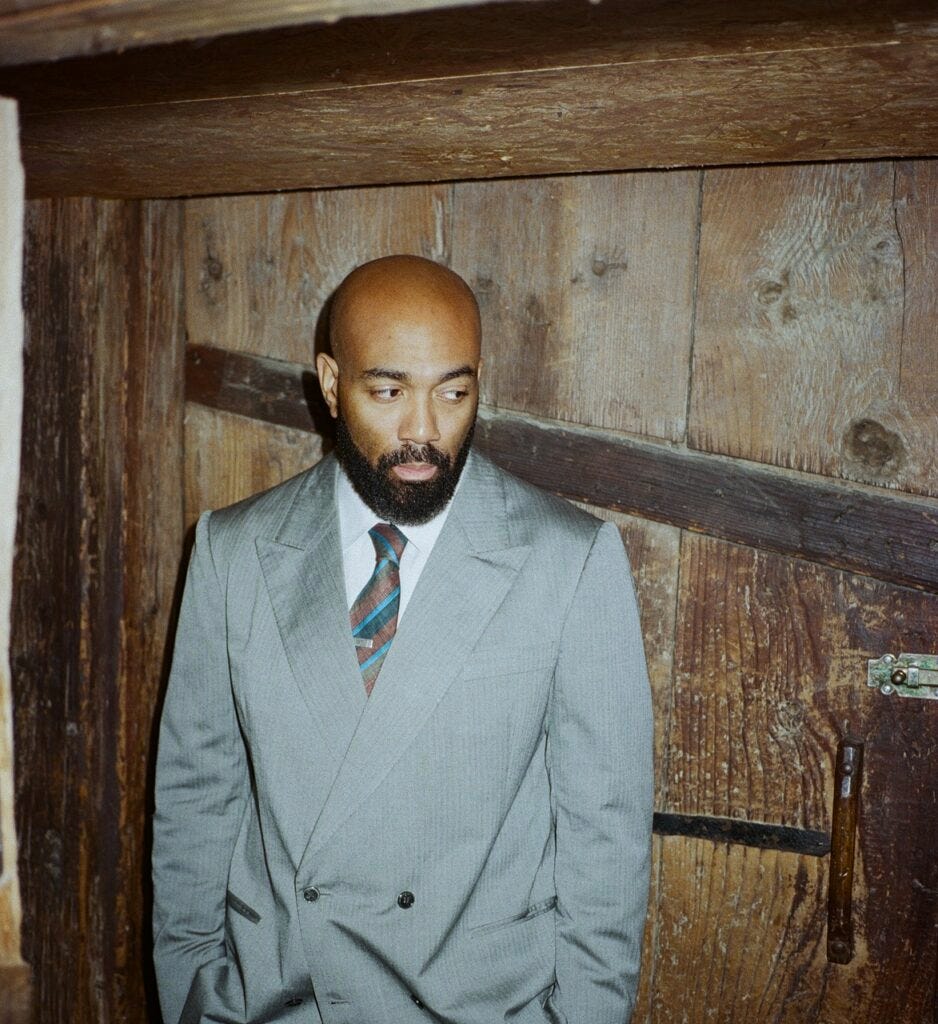
Written by Kinda Grizzly
P.S.: Please consider donating to our blog.
Originally published on our blog.